
The Eastern City Caravan
Price:4,100 $
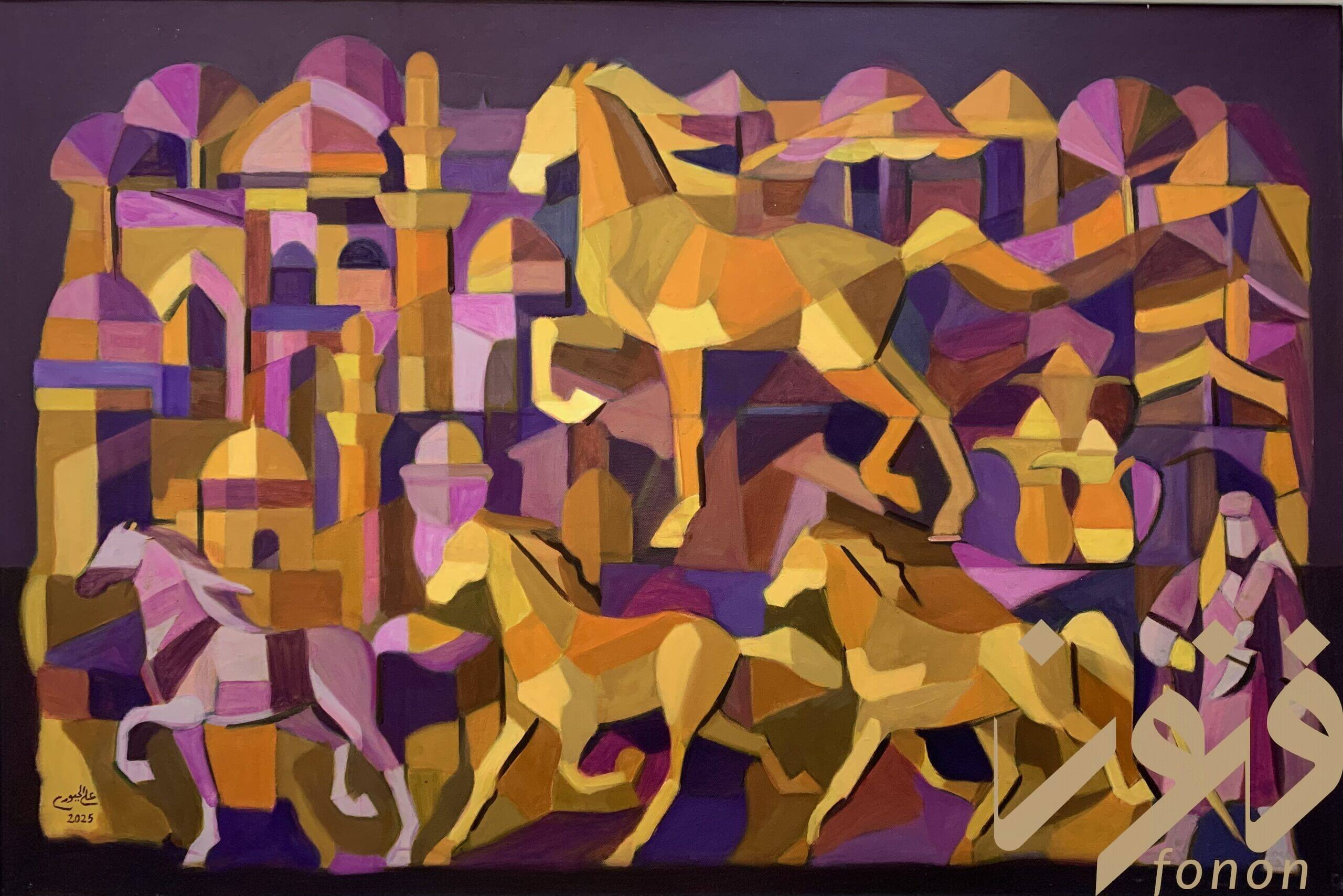
The painting evokes the feeling of a visual poem about the East; it does not document a specific place, but rather conjures the spirit of ancient Arab cities with all their bustle, markets, caravans, architecture, and cultural essence. It is a work that combines heritage and modernity, presenting the past through a contemporary visual language that strikes a balance between abstraction and clarity.
“This painting evokes the memory of ancient Eastern cities, where caravans intersect with historic architecture in a contemporary cubist composition brimming with warm colors and geometric rhythm. A work that celebrates movement, heritage, and identity, transforming elements of authentic Arab life into a visual symphony that blends tradition and modernity.”.
The painting depicts a scene inspired by historic Arab cities, where domes, minarets, and arches intertwine in a complex architectural composition, at the center of which is a caravan of horses led by a man in traditional attire, while a white horse appears in the foreground, as if silently observing the scene. The artist adopted a contemporary cubist style, transforming realistic elements into intertwined geometric spaces that pulsate with movement and rhythm, with a warm color palette dominated by gold, purple, violet, and orange, lending the work a celebratory character filled with warmth and nostalgia.
Technical Analysis:
Concept and Content:
The painting reflects the idea of the journey as a symbol of civilizational, commercial, and cultural exchange. Beauty is not merely a means of transportation, but a metaphor for continuity and patience, while the city appears as an accumulated memory that holds a long history of civilizations, markets, and caravans.
Composition:
The composition is dense and carefully thought out, with architectural elements intertwining with living creatures in a cohesive geometric network. The large camel occupies the center of the painting, serving as the visual focal point, while the horse on the left draws the viewer’s eye toward the depth, and the man on the right balances the visual composition and provides the scene with a narrative conclusion.
Color:
The artist achieved a harmony between warm and cool colors, though golden yellow and orange dominate the scene, evoking the light of sunset or the heat of the desert. Violet and purple, meanwhile, add a spiritual dimension and a sense of contemplation, lending the painting visual depth despite the flatness of the forms.
Style:
The work is influenced by Cubism through the deconstruction of forms into polygonal geometric shapes, without the subject losing its clarity. The painting does not seek to imitate reality, but rather to reinterpret it in a visual language based on abstraction and color rhythm.
Rhythm and Movement:
Despite its geometric nature, the caravan’s movement appears continuous thanks to the repetition of diagonal lines and the arrangement of forms and colors. The viewer feels as if the city itself is moving along with the caravan, in a fusion of space and time.
Symbolic Meaning:
- Horses: A symbol of patience, travel, trade, and the spread of civilization across the desert.
- The White Horse: It symbolizes nobility, strength, and freedom.
- The City of Domes: It refers to Eastern identity, cultural heritage, and spirituality.
- Human Nature: Human beings are the custodians of heritage and the embodiment of collective memory.
Overall Impression:
The painting evokes the feeling of a visual poem about the East; it does not document a specific place, but rather conjures the spirit of ancient Arab cities with all their bustle, markets, caravans, architecture, and cultural essence. It is a work that combines heritage and modernity, presenting the past through a contemporary visual language that strikes a balance between abstraction and clarity.
Only logged in customers who have purchased this product may leave a review.
Shipping Policy
We take great care in packaging and shipping our artwork to ensure it reaches buyers in the best possible condition.
Orders are carefully prepared for shipping as quickly as possible.
International shipping typically takes 7 to 21 days, depending on the country, customs procedures, and the shipping company.
Shipping fees are calculated at checkout based on the shipping destination and order size.
The necessary precautions are taken to protect the paintings from moisture, impacts, and scratches.
Refund Policy
We are committed to providing original, high-quality artwork, and we ask that customers carefully review the product details and images before completing their purchase.
Returns: You may return the product within 7 days of receipt if it arrives damaged or is materially different from the description provided in the store.
The product must be in its original condition and must not have been used or altered or damaged by the buyer.
There may be slight color differences between the images displayed and the actual product due to variations in monitor settings; this does not constitute grounds for a refund.
Cancellation / Return / Exchange Policy
For any questions, return requests, or exchange requests, please contact us using the contact methods available in the store, and be sure to include your order number and details of the issue.
General Inquiries
There are no inquiries yet.






المراجعات
There are no reviews yet.