
بلا ملامح Without Features
السعر:السعر الأصلي هو: 4,000 $.3,000 $السعر الحالي هو: 3,000 $.
عنوان العمل:
بلا ملامح
أبعاد العمل:
100×120 سم
نوع العمل:
لوحة تشكيلية – تعبيرية / سريالية
المواد المستخدمة:
ألوان زيتية على قماش كانفاس، تقنية الفرشاة الجافة مع دمج جزئي بالسكين
نص مختصر يشرح فكرة وفلسفة العمل:
“هي الموصل، في هيئة أنثى أرهقها الحزن.”
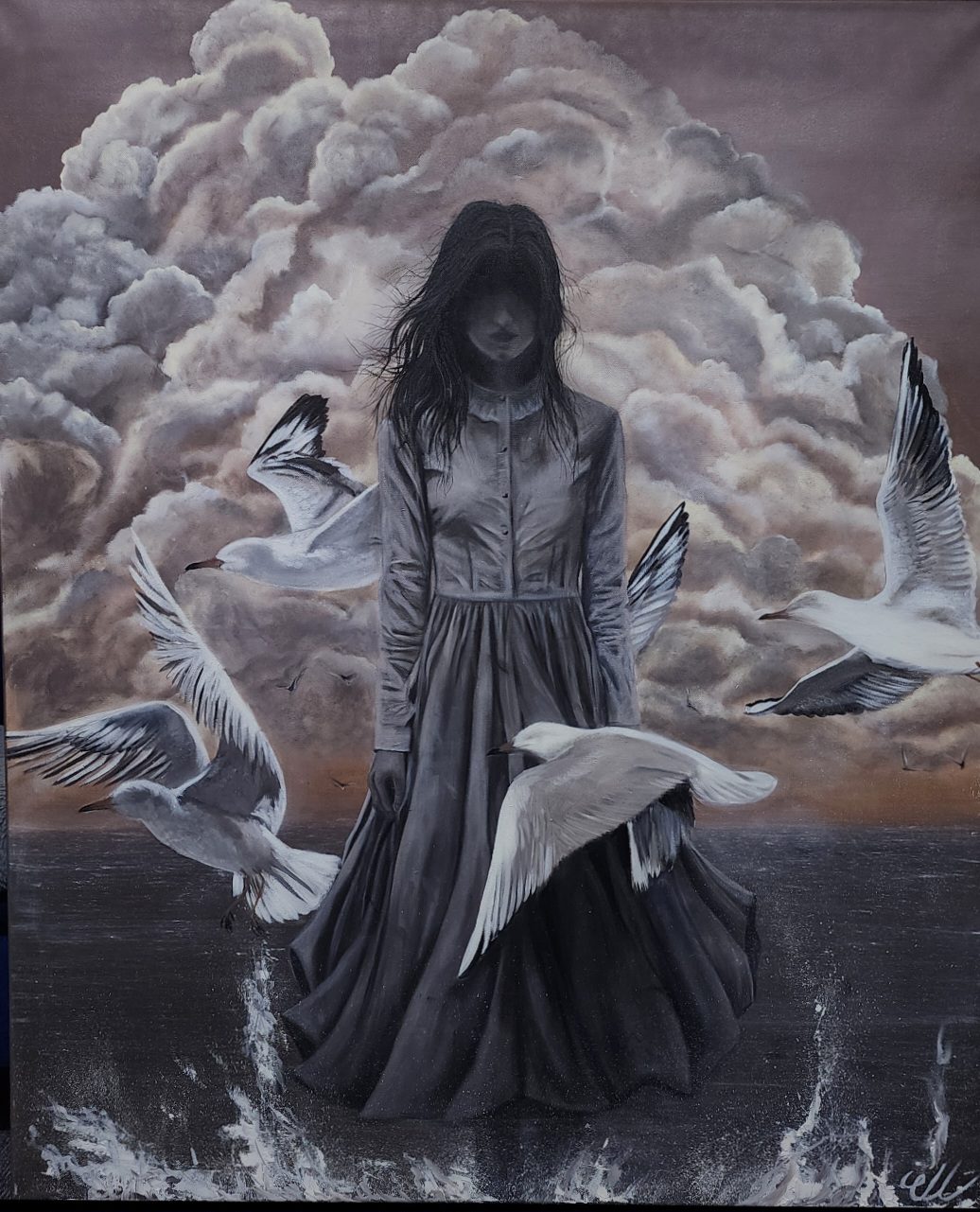
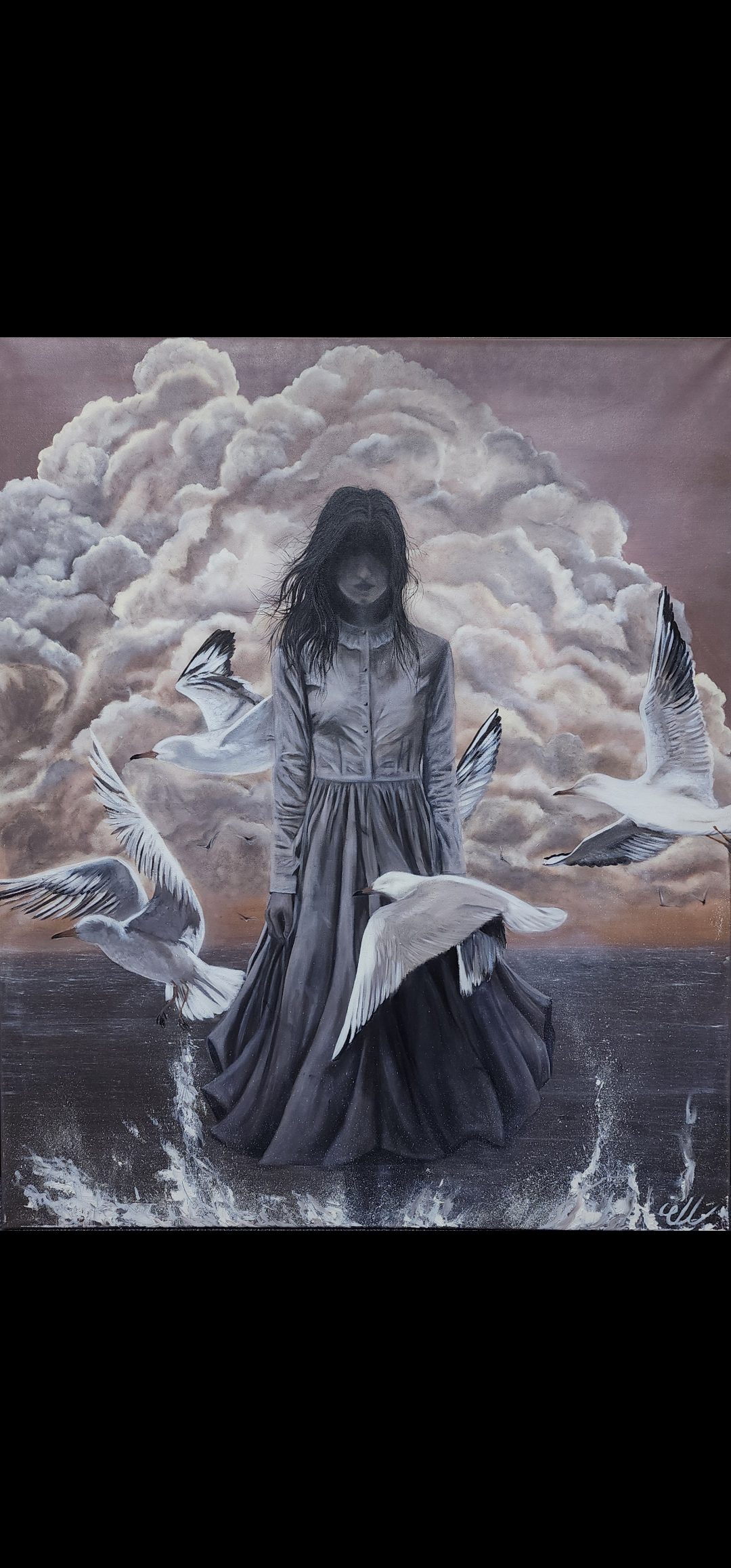
تقف في قلب اللوحة، بثوب رماديّ ثقيل يلتف حولها كما يلتف الألم على المدن المنكوبة. تغيب ملامحها، لان المعاناة كانت جماعية، ولأنها تحمل في عينيها ما لا يُروى. خلفها تتلبّد الغيوم، لا كغيمة مطر، بل كذكرى ثقيلة، شاهدة على صيف اختطفت فيه المدينة من حضن اهلها. الطيور التي تحلّق من حولها، ليست طيور سلام، بل أرواح بيضاء تائهة، تحمل أسماء من فُقدوا، من شُرّدوا، ومن لم يُدفنوا. تحوم بلا اتجاه، كما حام الناس حول مصير مجهول، ووطنٍ صار فجأة قفصًا من رعب. الماء عند قدميها ليس هدوء بحر، بل موْج غاضب صامت، يختزن صرخات النساء، وخوف الأطفال، ووجع الشوارع التي صمتت عنوة.
هذه اللوحة ليست مشهدًا خياليًا، بل مرآة لمدينة انكسرت ولم تمت، ووقفت على حافة الخراب بثبات أنثوي مذهل، تنظر إلينا بصمتٍ يقول كل شيء
A concise text explaining the concept and philosophy of the work:
She is Mosul, embodied as a woman worn down by grief.
She stands at the center of the canvas, wrapped in a heavy gray garment that clings to her as pain clings to stricken cities. Her features are absent, for the suffering was collective, and because her eyes hold what cannot be told. Behind her, clouds gather—not with the promise of rain, but as a weight of memory, bearing witness to a summer when the city was torn from the embrace of its people.
The birds circling her are not symbols of peace, but wandering white souls, carrying the names of those who were lost, displaced, and never laid to rest. They drift without direction, as people once did, suspended in an unknown fate, in a homeland that suddenly became a cage of fear.
The water at her feet is not the calm of the sea, but a silent, restless surge, holding within it the cries of women, the fear of children, and the ache of streets forced into silence.
This painting is not a work of imagination, but a mirror of a city that was broken yet did not die—standing at the edge of ruin with astonishing feminine resilience, gazing at us in a silence that says everything.
استفسارات عامة
لا توجد استفسارات حتى الآن.
منتجات ذات صلة
الرسم السريالي

الرسم السريالي

الرسم السريالي


رسم على القماش

رسم على القماش

رسم على القماش